Career & Growth2 min read
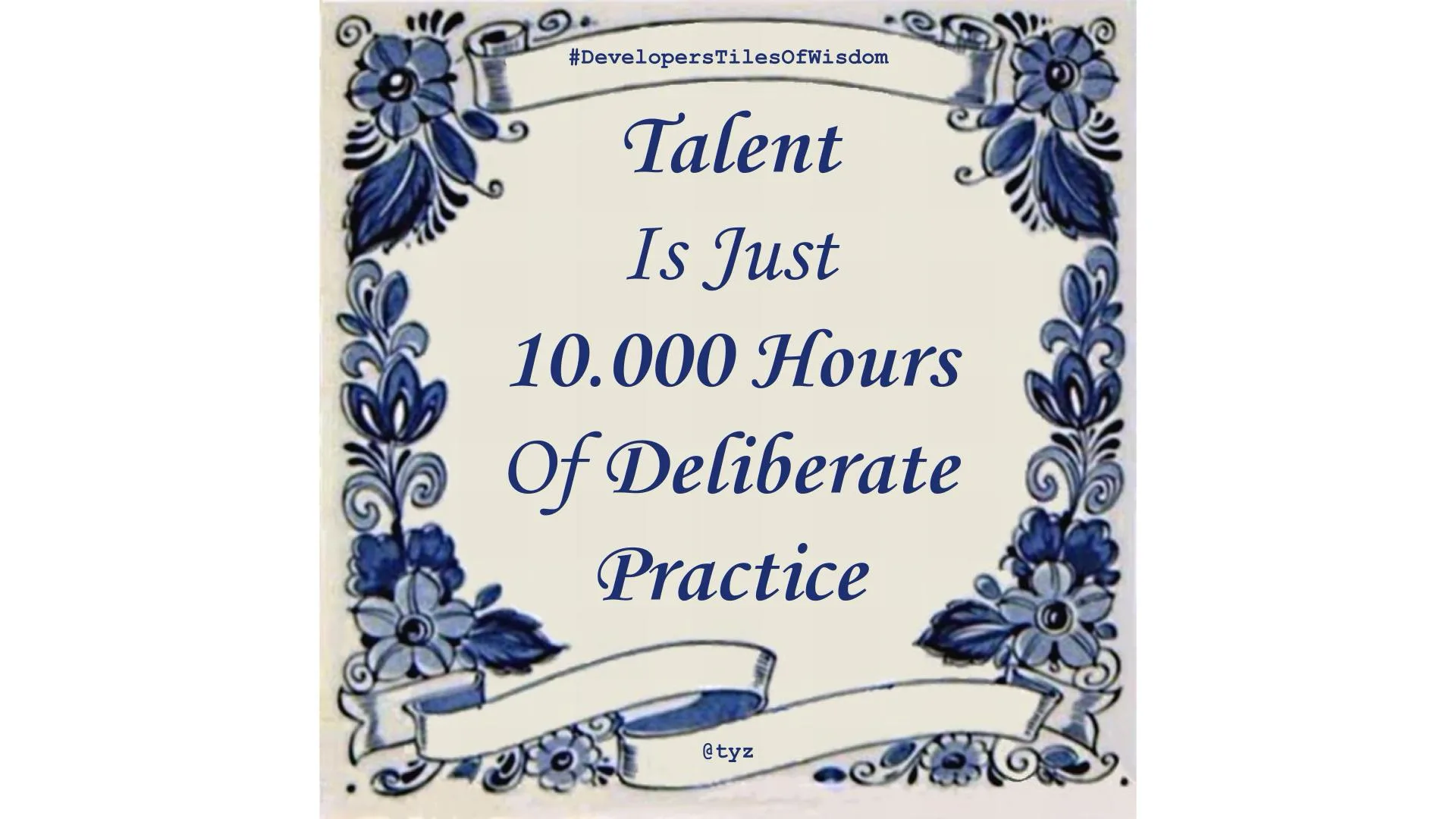
18. Talent Is Just 10,000 Hours of Deliberate Practice
Nobody is born a talented programmer. What we call talent is years of deliberate practice — clear goals, feedback, and reflection. Here's how to make your hours count.
New developers often ask: "How can I become a senior/lead fast?" Honest answer: put in the hours — and make them the right kind. 💡
🧠 Not born, but built
Nobody is born a "talented programmer." You become one by writing lots of code, learning fast, and acting on feedback. The "10,000-hour rule" is a heuristic, not a law: consistent, focused practice over time.
🎯 What the 10,000 hours do (and don't) mean
- Do: time × focus × feedback → expertise.
- Don't: mindless repetition.
- Key: quality > quantity. Deliberate practice = clear goals, feedback, reflection.
🛠️ Make your hours count
- Vary challenges: new framework, language, or project type.
- Raise difficulty gradually: stay just outside your comfort zone.
- Tight feedback loop: reviews, pairing, mentorship.
- Test mindset: reading/writing tests sharpens design.
- Ship real things: side projects, OSS, tools. 🚀
- Reflect & document: lessons learned and next steps.
- Teach to learn: writing/speaking clarifies thinking.
⚠️ Pitfalls to avoid
- Tutorial loop: watching instead of building.
- Busywork: hours without a learning goal.
- Shiny-object syndrome: constant hopping, no depth.
- No feedback loop: coding in isolation.
- Not shipping: perfection over progress.
✅ Bottom line: What we call "talent" is often years of deliberate practice.