2. The Time You Spend Writing Clean Code Is Time You Save Debugging Later
Clean code feels like extra work until you count the debugging hours it saves. Here's why quality always pays off — and how I build it in.
The most common argument I hear for why code isn't clean sounds like a cliché: "There was no time for that."
What I often see is that the same developer then spends hours (or even days) struggling to fix bugs in that same messy code.
At first glance, it might seem like a waste of time to:
- Come up with good names,
- Implement strict types,
- Apply code linting,
- Write tests,
- And have your code reviewed.
But that time pays off—many times over. Clean code simply has fewer bugs. And if bugs do occur, they are much easier and faster to find and fix.
Why writing clean code always pays off
In my projects, I always pay close attention to code quality. Here's how:
- ✅ I carefully think through a logical architecture.
- ✅ I choose clear and consistent names.
- ✅ I apply coding standards and implement code linting.
- ✅ I enforce strict types.
- ✅ I write tests and conduct thorough reviews.
What's the result?
- 🚀 Far less time wasted on debugging.
- 🚀 Code remains readable and understandable for everyone.
- 🚀 New features can be implemented faster and more easily.
And when you do this consistently, writing clean code becomes a habit. It no longer feels like "extra work," but simply the natural way to develop.
In short: there is no good argument for writing messy code.
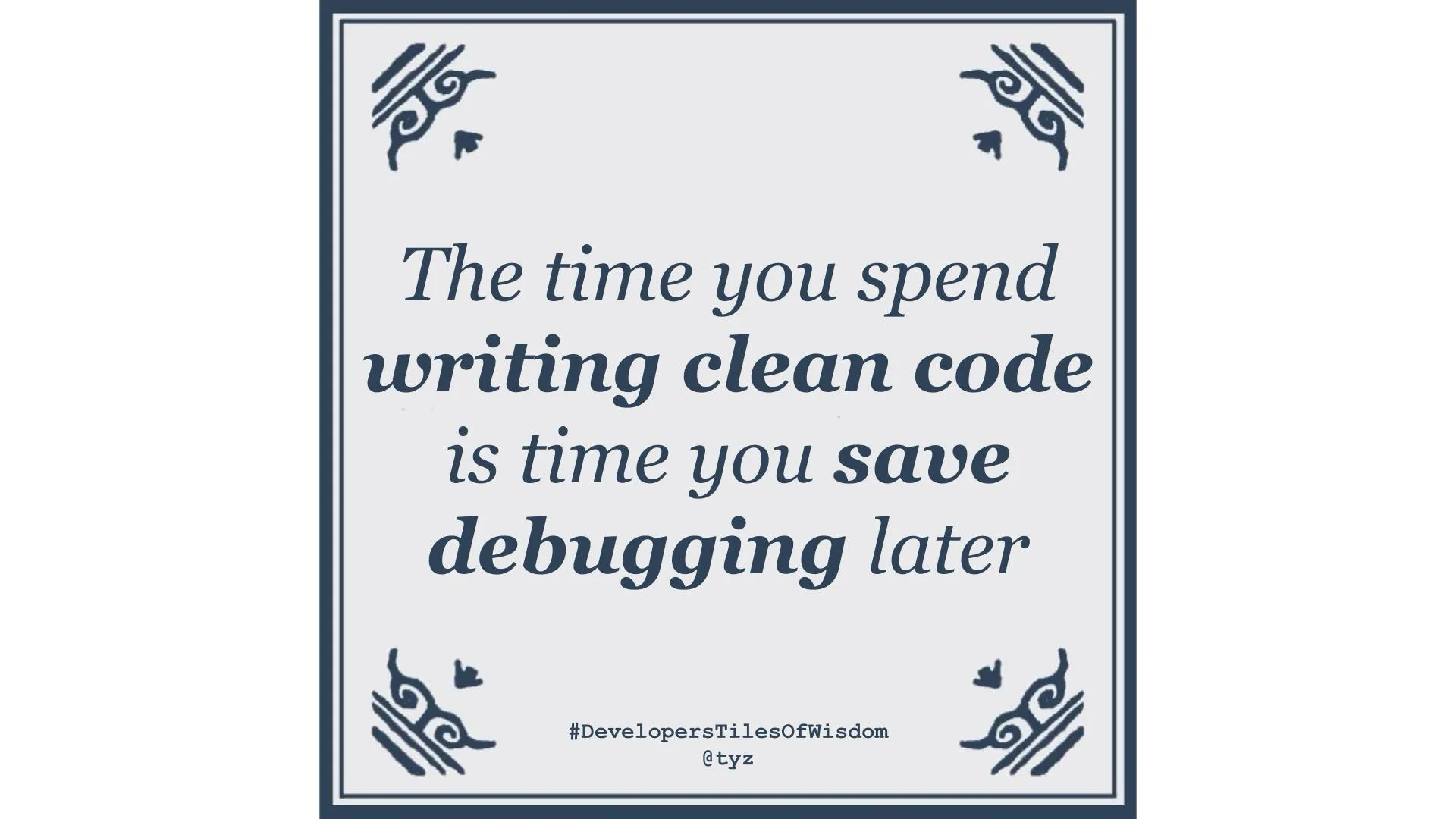
💡 Wisdom of the Week: "The time you spend writing clean code is time you save debugging later."
What do you think? Do you pay enough attention to code quality? Or do you often run into issues due to a lack of structure?
Need help making your codebase cleaner? Or curious to see how I implement clean code in my projects? Feel free to reach out—I love helping developers make their work better and more enjoyable.
📌 This is part of my weekly series, Developers Tiles of Wisdom. Follow me for more insights on writing better code and building better teams.